Translate

Showing posts with label Risk. Show all posts

Wednesday, February 24, 2021

Leaderships' Appetite for the Past

Leaders are about the future, right?  Well, don't be surprised that they often have a strong appetite for the past.

I'm observing a 'leeks and onions' moment among Christian leadership during this pandemic.  After the initial major adjustments to deliver services online there was a lot of discussion and even excitement around this being a 'moment' to re-think and reconfigure the very nature and mission of the Christian community (read: church).  Vision & dreaming was flourishing.

Now, note the conversations.  Seems those visions & dreams are now morphing into a focus on returning to normal.  This is where leadership energy is now predominantly focused.  Looking in the rear-view mirror to the leeks and onions of the past are proving too tempting.

The context for my 'leeks and onions' reference is clear to most Christian leaders.  But let me review:  When God lead an entire national community (Israel) out of their slavery in Egypt for a promised new existence, among leaders and followers there was the usual excitement, fear and uncertainty that accompanies change.   Then came the long haul process of actually getting to the new thing.  That's where things started to break down.  (We all love the rhetoric of change.  It's the execution that kills us!).  It was tough.  It was boring. It was tedious.  Kind of like our pandemic existence.  The people started hankering for what was: "We remember the fish we used to eat for free in Egypt. And we had all the cucumbers, melons, leeks, onions, and garlic we wanted.". (Book of Numbers 11:5)

When challenge came on the way to the future, and it wasn't yet clear what that future would look like, the default human reaction was to not only to reminisce, but to long for a re-creation of the past.

Most of what I read lately from church leaders are plans and promises for how to return to gathering. Gone are references to previous visioning & discussions that the pandemic was an unprecedented opportunity to re-shape the Church.  Now its really about how to get back to what we were.

Leaders - are you about preserving what was or persevering into the future?  Show yourself.  Lead or follow. 

It's a leeks and onions moment.


Monday, April 6, 2020

The Risk of Hospitality in a Pandemic

It's hard to think of exercising hospitality in a pandemic situation. Typically we define hospitality as having someone over for a coffee or taking a meal over to someone. Being 'hospitable' in our day is to be friendly, welcoming and allowing someone in to your home & perhaps into parts of your life.

However for those of us who follow the way of Christ, it is so much more. Hospitality has always defined the church as a universal community that defies the significance of status boundaries and distinctions of the larger society and instead recognizes the value of every person by providing care and welcome to all, especially the marginalized. (Recommended reading: Making Room by Christine Pohl). This drove believers in previous disasters, at a time when the world didn't have the medical knowledge & resources we have now, to be on the front line of caring for the sick and even of rescuing the dying & infected who were discarded on the garbage dumps outside the city. 

(Recommended reading on this: The Rise of Christianity by Rodney Stark)

True Christian hospitality can be best described as having your arms wide open to others. Your time, space, love and resources are available to serve them, at any cost. In the past that sometimes meant the risk of your life. What does that look like today?

Clearly we must obey the law which now requires us to be physically distanced so that we can reduce the spread of this virulent virus. I am not advocating we break out of our homes! We need to be part of the solution. But how far will my faith go if I am needed to step into a situation knowing that the risk could cost me my life?

Nurses and other health care workers are living with that question - and heroically answering. But what about ME? If the situation arose where a call to care for the needy and neglected arose where I would be exposing myself to this virus, would I respond knowing it could have a negative, perhaps fatal impact on my life?

Its Passion week in the Christian calendar - a week where we reflect on the 'risk' Jesus took as He walked into Jerusalem, knowing the outcome would mean His own suffering and death. Of course we love the end of the story - a resurrection! But beyond that resurrection, those of us who are Christ followers are actually called to share in the sufferings of Christ (Phil 3:10 etc.). There is an expected, ongoing experiential participation in suffering that is part of our life in Christ. Now, is that just a theoretical or theological statement? NO.  It means that the outcome of walking in the way of Jesus means we will experience suffering.

In this time of history I am asking the question of myself - What is my life in the presence of a pandemic when there are people suffering who need to be served? History shows that in previous plagues and disasters, Christians stepped into the suffering of others to serve at the risk (and cost) of their own lives. Why? Because to serve was the way of Christ, and to risk was possible because the life they possessed in Christ held promise beyond death.

I hold dearly to my life - to my wife, my children, my hopes & dreams. I have seen and experienced the pain death causes to families. I also now have a family member who is a front line health care worker, so this is all pretty close to home for me.  Yet am I personally willing to serve Christ in this (or any other situation), knowing that by doing so it could expose me to suffering & possible death, while bringing love and life to the other? Sobering.


It was done before.

Harv Matchullis


Tuesday, May 29, 2018

Stallion or Sailor?


Those of us who lead do so with an intention to bring about change. To create a better world or a better product is in our blood.  Our orientation is to see what could be and then make it happen.

“Make it happen”. That sounds like we can control process and outcome. Is that possible?

The premise of this “Nomadic Leader” blog is that effective leadership requires a nomadic spirit. You can read more on that in my inaugural blog from Sept 2009. We live in a world that itself is constantly transforming, therefore its essential we develop the skills to see what is changing in our world, then change ourselves accordingly. Gone is the great man theory of leadership where he/she sits atop their trusty stallion as the consummate expert and ‘general’, charging ahead into the future, leading the troops to certain victory.

I recently came across another image besides the Nomad, to characterize the kind of leadership required in this day & age. The Sailor.  Credit to the authors of the book “Getting to Maybe” for this image.  These 'sailor skills' reflect the spirit of the nomadic leader and are an essential leadership skill of this age.

“We tend to prefer the image of the leader on the charging stallion to that of a sailor trying to navigate stormy seas. The leader on the stallion seems to be in control of his destiny, while the sailor has no chance of controlling a stormy sea. The sea is too powerful to overcome with force and too unpredictable to reliably anticipate. Instead, the sailor needs to be adept at reading the weather, understanding the patterns, reacting to changes and adjusting his sails”. (p 20; "Getting to Maybe: How the World is Changed") 


I began my leadership life in the era of 5-10 year master plans, secured by a ‘stallion’ leader in place at the top. The attitude then was “come hell or high water we are going to make this happen”. That was the lingo of a true leader. I am not suggesting this age of uncertainty requires we ditch all long term planning. However, we do need a different leadership dynamic.  Here are some examples of how that dynamic is revealed in the life of a leader:

  • Learn, learn, learn. Question, question, question. The moment you believe you know all there is to know and create a ‘certainty’ about things is the moment you relinquish the role of true nomadic and transformational leadership.  You have become a Settler. 
  • Develop and tell a compelling story of the change you dream of creating. If you are going to get on a stallion at all, let this be what you champion! 
  • Draw up your tactics in pencil. Unknown or emergent challenges & opportunities will require shifts in tactics so that you can better achieve your mission. Learn to tack like a Sailor. It may look like you are making many zigzag moves, but as long as it’s in the direction of your mission, you will make headway. 
  • Talk to your employees/followers about trends and changes in real time. Keeping them in the loop, even if you are not yet sure what to do tactically, means they are better prepared in mind and commitment to make any shifts eventually required. Hold regular progress check-ins and 'status of our world' updates. Engage their input and you will find they are far more willing to adjust to changes than if you arbitrarily spring it on them. 
  • Replace a need to control with toleration for ambiguity. That can be a painful transformation for some. On a practical level, it may simply mean stepping away from a knee-jerk decision and letting it sit for a day or so as a way of developing this tolerance. 

Are you suited to lead in this fluid world?

You are when you choose to be part of the dynamics of transformation rather than a separate figure sitting on a stallion leading the charge.

Tuesday, January 3, 2017

Why Bother? Your Future Might Fail.


Are you contemplating a vision that will fuel your personal life or organization for the next phase? Do you want to ensure it will work out as planned?


Ten years ago when I was 48, I started to think about that arbitrary, yet significant marker of age 50. At that stage, I decided that I would not succumb to ‘retirement’ thinking and set out on creating a path to challenge myself vocationally & personally. I had a vision to achieve. Now that I am approaching the marker of 60, I am contemplating what the vision might be for the next stage of life. 

You should know there was a “disturbance in the force” while executing my previous vision.

The plan I put in place in my late 40’s and executed in my 50th year did not turn out as I imagined over the next seven years. There were twists and turns I never anticipated. In hindsight the path I walked enhanced and redirected my thinking and vocational orientation, but to be honest – this wasn’t the script I wanted to write. In fact, a lot of it hurt and just plain sucked.

Failure to achieve a vision as dreamed begs these questions:

Is it worth dreaming and executing on a vision?

Why dream about making things different in your personal or leadership life if what you start out with isn’t where you end?

Why pursue a future that may fail?

True personal and corporate leadership is less noun and mostly verb. In other words, leadership isn’t a position. It’s a risk.

Leadership by nature takes risks because to lead is to enter a process to discover the way to a place you have not yet gone. Thus not all people in positions of leadership actually lead. Many are managers. Not all people who say they want to lead their life forward actually do. Many are responders to life.

No one has a lock on the future. Despite all our geeky dreaming about time travel, no one has been to the future and sent back reports that will give you the information needed to come up with a no-fail

Many people ‘speak’ the language of risk and advance, but in practice simply manage their way forward. As an example from my world of Christian non-profits, church leadership teams can often speak about risk and mission advance to reach to the very edges of a society, but their default organizational orientation to safety, management processes, systems and orthodoxy of thinking and execution militates against their language, squeezing out those who are actual risk takers.

Risk is part of advance both personally and corporately. Real risk. Not the language of risk. That means:

Acting on your convictions. There’s a saying that in old age you won’t regret the things you did, but the things you did not do. Think about that. I have met many ‘leaders’ over the years in my work that possessed deep convictions about issues but never executed because they feared others wouldn’t follow, or they feared the potential change was too much for their organization. Some even feared they’d lose their job if they acted on their conviction. If any of these are your story, then…

…you are not a leader, you are an employee.
…something potentially significant was never birthed in or through you.
…the real you has been diminished

Prepare & Plan. Then be ready for it to change. German military strategist Helmuth von Moltke famously noted: “No battle plan survives first contact with the enemy”. Risking doesn’t mean ignoring good preparation. It does mean that what you started with won’t last because the future is full of the unexpected and unanticipated. You will have to adapt and change. Will the prospect of that keep you from launching out?
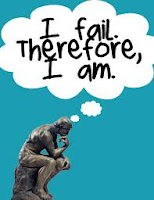
Learn as you go. No one can ever know it all at the start. “Risk management” while it has its place, is also an oxymoron (and likely the creation of managers). Risks inherently can’t be managed but when faced; they can both inform and guide what needs to happen next.

Adopt a new perspective. A truly nomadic leader/thinker that is capable of navigating the changes life and leadership inherently contains, takes on a perspective I have taken from a book title: The Obstacle is the Way. (Author: Ryan Holiday). This perspective means we don’t view the obstacles that risk often presents to us as inhibitors to a vision but rather as the pathway to what’s next. You’ll need this if you have any hope of persevering. In fact, you’ll need this to even get started!

The next things in this world, whether it’s a cure for a disease, your personal dreams & visions, a new form of energy to be developed, a means to address exploitation, a path to get an organization ‘on purpose’, a way to bring true abundance to the marginalized etc., will ONLY come from those who say:

   This isn’t right.

      This isn’t enough.

         It can be better.

            I will try a new thing.


Be bold. God knows this world desperately needs courageous people.