Translate

Showing posts with label Future thinking. Show all posts

Wednesday, February 24, 2021

Leaderships' Appetite for the Past

Leaders are about the future, right?  Well, don't be surprised that they often have a strong appetite for the past.

I'm observing a 'leeks and onions' moment among Christian leadership during this pandemic.  After the initial major adjustments to deliver services online there was a lot of discussion and even excitement around this being a 'moment' to re-think and reconfigure the very nature and mission of the Christian community (read: church).  Vision & dreaming was flourishing.

Now, note the conversations.  Seems those visions & dreams are now morphing into a focus on returning to normal.  This is where leadership energy is now predominantly focused.  Looking in the rear-view mirror to the leeks and onions of the past are proving too tempting.

The context for my 'leeks and onions' reference is clear to most Christian leaders.  But let me review:  When God lead an entire national community (Israel) out of their slavery in Egypt for a promised new existence, among leaders and followers there was the usual excitement, fear and uncertainty that accompanies change.   Then came the long haul process of actually getting to the new thing.  That's where things started to break down.  (We all love the rhetoric of change.  It's the execution that kills us!).  It was tough.  It was boring. It was tedious.  Kind of like our pandemic existence.  The people started hankering for what was: "We remember the fish we used to eat for free in Egypt. And we had all the cucumbers, melons, leeks, onions, and garlic we wanted.". (Book of Numbers 11:5)

When challenge came on the way to the future, and it wasn't yet clear what that future would look like, the default human reaction was to not only to reminisce, but to long for a re-creation of the past.

Most of what I read lately from church leaders are plans and promises for how to return to gathering. Gone are references to previous visioning & discussions that the pandemic was an unprecedented opportunity to re-shape the Church.  Now its really about how to get back to what we were.

Leaders - are you about preserving what was or persevering into the future?  Show yourself.  Lead or follow. 

It's a leeks and onions moment.


Tuesday, May 29, 2018

Stallion or Sailor?


Those of us who lead do so with an intention to bring about change. To create a better world or a better product is in our blood.  Our orientation is to see what could be and then make it happen.

“Make it happen”. That sounds like we can control process and outcome. Is that possible?

The premise of this “Nomadic Leader” blog is that effective leadership requires a nomadic spirit. You can read more on that in my inaugural blog from Sept 2009. We live in a world that itself is constantly transforming, therefore its essential we develop the skills to see what is changing in our world, then change ourselves accordingly. Gone is the great man theory of leadership where he/she sits atop their trusty stallion as the consummate expert and ‘general’, charging ahead into the future, leading the troops to certain victory.

I recently came across another image besides the Nomad, to characterize the kind of leadership required in this day & age. The Sailor.  Credit to the authors of the book “Getting to Maybe” for this image.  These 'sailor skills' reflect the spirit of the nomadic leader and are an essential leadership skill of this age.

“We tend to prefer the image of the leader on the charging stallion to that of a sailor trying to navigate stormy seas. The leader on the stallion seems to be in control of his destiny, while the sailor has no chance of controlling a stormy sea. The sea is too powerful to overcome with force and too unpredictable to reliably anticipate. Instead, the sailor needs to be adept at reading the weather, understanding the patterns, reacting to changes and adjusting his sails”. (p 20; "Getting to Maybe: How the World is Changed") 


I began my leadership life in the era of 5-10 year master plans, secured by a ‘stallion’ leader in place at the top. The attitude then was “come hell or high water we are going to make this happen”. That was the lingo of a true leader. I am not suggesting this age of uncertainty requires we ditch all long term planning. However, we do need a different leadership dynamic.  Here are some examples of how that dynamic is revealed in the life of a leader:

  • Learn, learn, learn. Question, question, question. The moment you believe you know all there is to know and create a ‘certainty’ about things is the moment you relinquish the role of true nomadic and transformational leadership.  You have become a Settler. 
  • Develop and tell a compelling story of the change you dream of creating. If you are going to get on a stallion at all, let this be what you champion! 
  • Draw up your tactics in pencil. Unknown or emergent challenges & opportunities will require shifts in tactics so that you can better achieve your mission. Learn to tack like a Sailor. It may look like you are making many zigzag moves, but as long as it’s in the direction of your mission, you will make headway. 
  • Talk to your employees/followers about trends and changes in real time. Keeping them in the loop, even if you are not yet sure what to do tactically, means they are better prepared in mind and commitment to make any shifts eventually required. Hold regular progress check-ins and 'status of our world' updates. Engage their input and you will find they are far more willing to adjust to changes than if you arbitrarily spring it on them. 
  • Replace a need to control with toleration for ambiguity. That can be a painful transformation for some. On a practical level, it may simply mean stepping away from a knee-jerk decision and letting it sit for a day or so as a way of developing this tolerance. 

Are you suited to lead in this fluid world?

You are when you choose to be part of the dynamics of transformation rather than a separate figure sitting on a stallion leading the charge.

Tuesday, June 6, 2017

The Cautioneers


Image result for cautiousJust when I thought I had invented a new word, Google Search popped my balloon. Turns out the term ‘Cautioneers’ preceded my innovative musings. It’s the name of a band out of Toronto! It is also a term used by the Enneagram. Interestingly the Enneagram captured some of the essence of my (once innovative) meaning: ‘safe, secure, reliable, predictable, cautious’. I will take this definition & expand on it in the context of leadership, especially those who lead the followers of Jesus to their mission of restoring the world back to God.

There is nothing inherently wrong with a leader who occasionally demonstrates the characteristics of The Cautioneer. If we did not display some of these qualities (or was connected to someone who does), leadership and followership would be chaotic. Ask any follower of a purely idea-driven, “squirrel!” kind of leader.

However, to lead from the posture of a Cautioneer is what is bringing the church to a slow crawl in its mission to restore the world to Jesus. Shepherds and pastors by nature default to organizing systems and safe pasture for their flocks. These gifts dominate the paid leadership roles of the organized church. Thus, the resulting church has been defined and confined by boxes, programs and systems. It is certainly busy, but rarely is it found in the cracks of human experience and at the edges of society. There is still a “come to check out what we offer” mentality that drives the church’s mission. It’s safer that way, isn’t it? It’s a Cautioneer approach.

Interestingly the metaphors that describe the world changing ways of Jesus - salt, light, yeast and seed – inherently must be scattered in order to effect change. Yet the Cautioneer leaders find ways to gather and ‘nurture’ these elements rather than risk scattering them around. Thus, their churches are often active internally and launch out on a few forays into the world to ‘pillage the village’ and gather new recruits. Their activity makes them feel and appear they are on mission. Reality check: Activity does NOT equal mission.

I have two questions to pose, with my own answers (lest you think I don’t think about this stuff). I’m eager to hear your own responses.

1. What happened to us?

2. Can we do anything about it?

My personal opinion about what happened:


  • In the past few generations or so, increasing wealth enabled resources to be poured into gathering places and then staff to take care of them.
  • These places needed ‘pastors’, basically leaders who could manage the place and the activities that would justify the existence of the place.
  • ‘Place’ came to define ministry and a programming boom ensued, which then elicited the need for more staff. This was helped along by a culture sympathetic to Judeo-Christian values that were eager to receive these services.
  • This became the norm and our colleges and seminaries followed suit by training people for the model, but not necessarily the mission.
  • We woke up to the reality that we are not in Judeo-Christian Kansas anymore, and have tried to tweak our model to be ‘relevant’.

Image result for pioneer spirit
Now here we are, in an era where many are speaking out about this. Hirsch, Barna, McLaren, Bibby, Devenish, Platt, Wright and a host of others are in various ways calling us out to cast off the Cautioneer mantle and discover new ways of thinking and organizing so that the mission can be forefront. In spiritual gift terms, the apostolic/prophetic and evangelist mantle needs a renewal within the leadership community of the local & global church. FYI those gifts will inherently seek out new models, forms and ways of being.

Frankly, I don’t hold out much hope for existing church institutions to be able to make the change. (I do hope they try). Mission rhetoric abounds, but it’s calling out from a model resistant to change and unable to change because it won’t face up to the fact parts of it won’t make it into the future. I see some churches tweaking at the edges, but unable to create a wholesale change without a decades long time-window or a commitment to disruptive change.

So to the second question, what can be done?

INDIVIDUALS or GROUPS - Start something. Don’t wait around for the wheels of institutional machinations to catch on and support your idea. The story of church growth has more to do with innovators walking out to the edge of cities, towns and social networks than it does intentional institutional initiatives. 

  • Caveat: Don’t do it alone. Find mentors and advisors to help guide your endeavour. The truth is plans go wrong for lack of advice but many advisers bring success (Prov 15:22). A lot of harm has been done by Lone Rangers. A lot of good is done when pioneers rely on other pioneers.
  • Encompass Partnerships is designed to assist you start something. It’s one of the key reasons we started in the first place. Contact info@encompasspartnerships.org if you want to start a conversation

CHURCHES – Become a hub of innovation. Your ship may not be able to turn easily or fast, but you can launch smaller vessels that use your ship as a resource hub. Within your gathering most definitely are those who are wired to go to the edge, to seek out new places and spaces for the gospel and do things unconventionally compared to what your church currently defines as ministry. They are those who by nature and gifting are the apostles, the prophets, the evangelists. You have already lost quite a few of them because of inattention and asking them to squeeze into what is. They leave and typically go somewhere else, start something on their own, or leave the church altogether out of frustration. So, why not instead embrace them (not too closely, because after all, they are pioneers) and develop an approach that encourages and coaches their ideas?

  • Leadership is to equip ALL followers of Jesus for the work for He calls them. However, clearly your church programming is not capable of reaching as far as its people can reach. I hope that moves you to seek the answer to: How then do we empower those people? Struggle with that one! The Spirit will guide you. I’m not going to provide a 3-point answer.
  • Appoint a staff person, create a department, assign time & space among existing staff – whatever works in your corporate environment, which shows and speaks to innovators that you are open!
  • WHO can you partner with to ensure these people are given guidance and have some wind blown into their sails? Encompass’ coaching can help fill that role, but we have capacity issues too. You could find mentors for these people among current/former international mission workers or others who have worked in innovative, idea & project-generating environments. Find people with great coaching skills (not advice-givers) who can help a person walk through their thinking about an idea.

Whether you are that individual with a passion, or the church wanting to empower that passion, be ready for one common outcome: It will get messy. The world is messy. People’s lives are messy. Oppressive systems are messy. Yet this is where we are called to live the Life and show the Way of the One who is the key organizing Truth for a restored world.
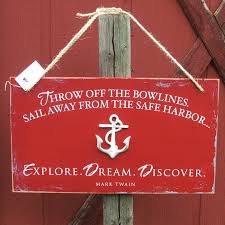
Image result for throw off the bowlines

Harv

Monday, January 27, 2014

Tomorrow Man


If I were a cartoon character, I’d be Tomorrow Man; able to see through the present and into the future;  capable of leaping from what is to what could be.  Yeah – I’d be great and have a very cool suit, kind of like this:

But Tomorrow man has a weakness. His kryptonite is ‘today’.

That’s the issue with my (your) character as Tomorrow Man.  His Tomorrow consumes his Today.  Now that’s not bad when you think about it in perspective of acting ‘today’ in order to create an envisioned ‘tomorrow’.  However it becomes a liability when a leader becomes so consumed with the future that they miss out on ‘today’.  
 
If ‘tomorrow’ consumes today and leaves it wasted and empty, an unrealistic perspective of life and leadership has taken over.  We often hear of the dreamers who are no practical good; of those who are ‘heavenly minded but no earthly good’.  There is some truth to that.

I acknowledge that I have missed out on a lot of the present; the enjoyment of the moment; the dwelling with others (and myself) in TODAY.  As a result I have learned (painfully) that spending too much time on envisioning and living in the future as your current reality will disconnect you from family, friends, hobbies, interests and even from knowledge, because you are so set on getting there you skim the surface of relationships & tasks.

A few thoughts & self-coaching questions from one Tomorrow Man to another Tomorrow Man or Woman:


YOU ONLY POSSESS TODAY.  
No one on this planet has any guarantee that they will have a tomorrow on this earth.  That being the case, take notice of ‘today’. What & who is in it?

  • How can you engage with someone so that if today was your only contact with them, they’d value and cherish it tomorrow?

  • How will the tasks at hand be accomplished if today was your only connection to tomorrow? 

ONLY TODAY GETS YOU TO TOMORROW. 

  • What practical steps need to be taken today that if not done, only postpone tomorrow?

STOPPING TO EMBRACE TODAY MAY HAVE CLUES FOR TOMORROW.  
If you are a leader working on implementing a vision, this is a critical attention-posture to take!

  •  Life and leadership is nomadic.  It is not linear.  As the journey progresses, the turns and twists of circumstances and real-time decisions lead to new and sometimes unfamiliar landscapes. 

  • Rarely will future plans ever turn out the way they were originally envisioned.  Instead of being frustrated with the changes, could it be that what happens in your today holds some clues/ideas/new contexts to actually create an even better tomorrow?

  • How can you create daily space to reflect on how the day’s events influences tomorrow?


Stopping to embrace today makes tomorrow worth it. 
You could lose it all tomorrow.
Wouldn’t it be great if you didn’t waste today for a tomorrow that never came? 

Harv Matchullis